

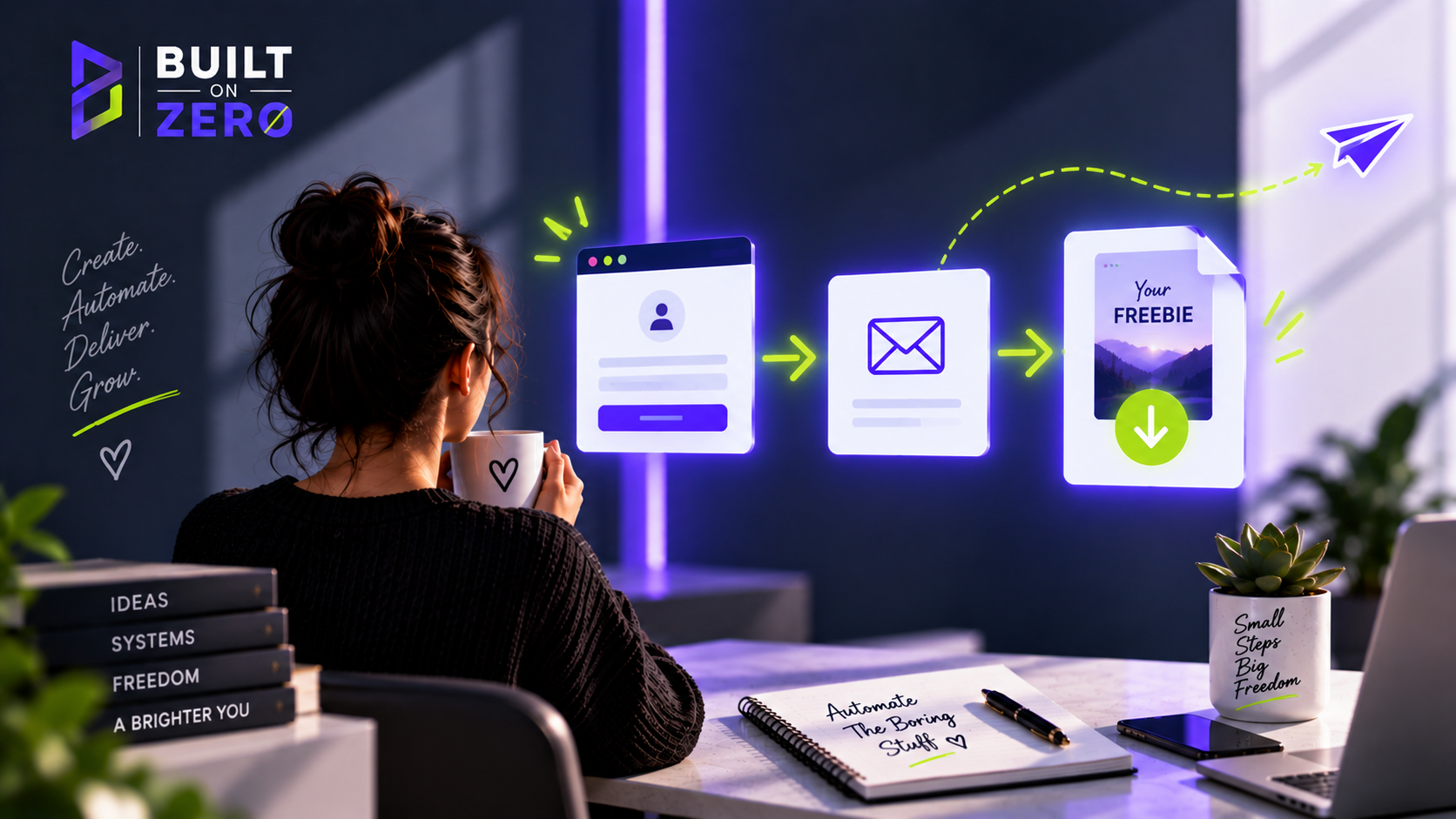
Creating a freebie is the easy part. Delivering it properly is where the little details begin multiplying. I learned that while building the $0 Business Stack. Once I had the file, I still needed a page to offer it, a form to capture the email, a way to send it automatically and a sensible next step after the download. A free PDF becomes a lead magnet only when the system around it works.
The first thing I would decide is how the subscriber receives the resource. You can put the download directly on the thank-you page, send it by email or do both. Email delivery has an obvious advantage: it trains the subscriber to look for your messages and verifies that the address they used can receive what you send. A thank-you-page link gives immediate access and reduces frustration if the email takes a minute. For Built on Zero, I like the idea of making the experience easy rather than guarding a free PDF like a state secret.
The file itself should also be hosted somewhere stable. Systeme.io provides file storage as part of its platform, and its current free plan lists unlimited file storage alongside unlimited email sends. That means I do not need to introduce another paid delivery service simply to send the $0 Business Stack. The resource, funnel and email can remain inside the same system.
Then comes the automation. When the form is submitted, the contact needs to enter the right campaign or receive the right message. The exact clicks inside Systeme.io can evolve, but the logic is straightforward: subscription happens, the system recognises it and the promised delivery is triggered. I want to test this with a fresh email address every time I make a meaningful change. The person downloading the resource should never become my quality-control department.
USE SYSTEME.IO TO DELIVER YOUR FREEBIE AUTOMATICALLY — CLICK HERE
That is my affiliate link, which means I may earn a commission if you later purchase an eligible Systeme.io plan. The current free plan is sufficient for a basic lead-magnet funnel, so there is no need to pay merely to automate delivery.
The delivery email should be painfully clear. Put the resource near the top. Do not make someone read a long origin story to find the thing they requested. A short introduction is enough: here it is, here is how to use it, and here is what you can expect from me. If the freebie requires instructions, include them. If it is a checklist, tell the reader where to begin. Good delivery is part of the value.
I also want to name the file sensibly. “final-v3-new-REAL.pdf” may make perfect sense on my laptop and look ridiculous when a subscriber downloads it. The filename is a tiny brand touchpoint. Something like “Built-on-Zero-$0-Business-Stack.pdf” is recognisable later when it is sitting in a downloads folder among fifty other files.
The thank-you page is another opportunity to reduce uncertainty. Tell the person to check the inbox and, if relevant, spam or promotions. Tell them which sender name to look for. If the download is also available on the page, make the button obvious. Then choose one next step. The person has already shown interest, so a related article or beginner tutorial can deepen the relationship while they are still engaged.
I would not put an unrelated affiliate offer directly after every opt-in merely because the page can contain one. The offer has to make sense. If the lead magnet is a $0 tool stack, Systeme.io is relevant because it is part of that stack. If the lead magnet were about something completely different, forcing a funnel-builder promotion onto the thank-you page would weaken trust. Monetisation works better when the commercial action is a continuation of the problem.
The freebie itself needs to deliver enough value that the subscriber does not feel tricked. There is a bad version of lead magnets where the PDF contains six pages of introduction and then tells the reader to buy the real answer. I do not want that. The $0 Business Stack should solve the problem it promises to solve. The paid or affiliate next step can solve a larger problem, but the free thing has to stand on its own.
This is also why specificity matters. Systeme.io’s current lead-magnet guidance warns against freebies that are too broad. “Everything you need to know about online business” sounds substantial and usually becomes overwhelming. A narrow checklist, template or stack can be used immediately. The easier the resource is to use, the more likely the reader is to remember who gave it to them.
Once delivery works, I can build the follow-up. The first message is fulfilment. The next messages can help the subscriber implement what they downloaded. If the stack includes a landing-page tool, I can link to my tutorial on building the page. If it includes email, I can explain the first sequence. The lead magnet becomes the beginning of a curriculum rather than an isolated giveaway.
That is where automation starts earning its keep. I do not have to remember which subscriber joined on which day. The system can deliver the right starting material while I continue creating new content. This is one of the few forms of automation I think beginners should set up early because the process is predictable and directly tied to the promise made on the page.
I would still keep the automation human. The email does not need to announce that it is automated, and it does not need to pretend it was personally typed thirty seconds after the opt-in. It simply needs to be useful and accurate. Readers care much more about whether the link works and the content helps than whether a robot technically pressed Send.
Testing should include the awkward cases. What happens if the person enters the same address twice? What happens if the email lands in promotions? Is the download link public and functional? Does it work on mobile? Is the file size reasonable? Can someone understand the resource without having read the landing page? These are small questions until one of them breaks the experience.
I also want to track which lead magnets actually produce subscribers who stay engaged. A freebie can have a high opt-in rate and still attract the wrong people. If thousands download something because it is broadly appealing but none care about the subject I eventually monetise, the list is larger and less useful. The $0 Business Stack is intentionally close to Built on Zero’s commercial content: tools, starting cheaply, funnels, email and affiliate infrastructure.
That alignment is what makes a lead magnet more than a list-building trick. The person who wants the free resource is plausibly interested in the articles and recommendations that come next. The business does not have to change subjects between acquisition and monetisation. I can keep solving versions of the same problem.
If you have already created a freebie and it is still sitting in Google Drive because the delivery feels complicated, build the smallest working system. One page. One form. One delivery email. One thank-you page. Test it. You can add a sophisticated welcome sequence later. Do not let the imagined final funnel stop the first person from receiving something useful.
The moment the delivery works, your content has a destination. Every relevant blog post, pin and social post can invite the right person into the same system. That is the point at which a free resource starts behaving like an asset. It works while you are writing the next article, sleeping, or doing completely unrelated work. The automation is not the business, but it keeps the door open when you are not standing there.
I also want the resource to survive outside the email. People save PDFs, forward them and find them months later. Put the brand name and a sensible route back to the website inside the file itself. That way the lead magnet can continue introducing Built on Zero even after it has been separated from the original delivery email.
Version control matters too. If I improve the $0 Business Stack, I want the delivery link to point to the current version rather than maintaining several outdated files. A simple file-management habit now prevents old pins and old emails from distributing information I no longer recommend.
There is a privacy point here too. A lead magnet is not permission to do anything you like with an email address. The signup language should make it clear that the person is joining your email communication, and the messages need an unsubscribe route. I am building the list as a long-term business asset, so consent and trust matter more than squeezing a few extra addresses out of an ambiguous form.
I also want to periodically click the old delivery links myself. Websites change, files get replaced and permissions can be altered. An automated funnel can quietly keep running for months while delivering a broken link if nobody checks it. Automation removes repetitive work; it does not remove ownership.
A quick note before you go: Software pricing, features, free-plan limits and terms can change, sometimes without much notice. Everything in this article was accurate to the best of my knowledge when it was written or last updated, but please check the provider’s official website for the latest pricing, features and terms before making a decision or signing up. Built on Zero does its best to keep our guides current, but we can’t guarantee that every price or feature will remain unchanged after publication.

